
 Date: Nov 15, 2026
Quick Answer
Budgeting for a Ferris wheel works best when the attraction is treated as a complete event-planning line item, not a rough placeholder. Start with a current proposal, then confirm site, schedule, access, selected ride, optional presentation elements, and any unresolved venue responsibilities before the budget is approved.
Build the Ferris Wheel Budget Before It Becomes a Surprise
A Ferris wheel can be one of the most visible parts of a festival or corporate event, but it should not enter the budget as a rough placeholder that gets revisited at the last minute. The practical approach is to treat it as a planned event-production item: gather the details the rental company needs, obtain a current proposal, and make sure the event budget accounts for the site and coordination decisions connected to the attraction.
This matters when the wheel shares space with stages, tents, vendors, catering, entrances, parking, or other major event elements. A useful budget is not just a number beside “Ferris wheel.” It records what has been confirmed, what is included in the proposal, and what still needs an owner.
Start With a Real Proposal, Not a Placeholder Number
Before assigning a final amount, gather the basic information that can be shared with the rental provider: event city and state, date or dates, venue, preferred operating hours, and the type of event. The Ferris wheel rental process is the right starting point because it turns the budget conversation into a specific event request rather than a generic estimate.
Once a proposal is available, use it as the working number in the event budget. Keep the proposal, contract discussions, and venue notes together so the planning team can see which details are settled and which could still change. That is more useful than relying on a figure copied from an old event or another venue.
Budget for the Site, Not Just the Ride
A large attraction has to work within the physical event plan. Before the number is treated as final, confirm the access route, available setup area, ground conditions, guest approach, queue area, and how the attraction fits around the rest of the venue. The goal is to identify them before the larger budget has already been approved.
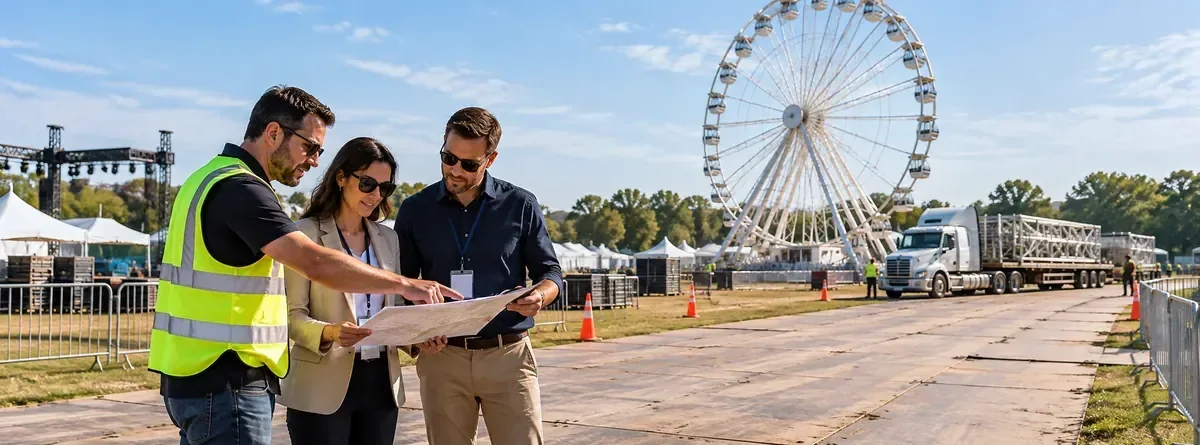
For a festival, this may mean coordinating the wheel with a stage footprint, vendor rows, fencing, service roads, and crowd movement. For a corporate event, the same discussion may involve a campus, hotel property, convention venue, private grounds, or a branded guest experience. In either case, the budget should reflect the actual site plan rather than assuming every venue works the same way.
Separate Must-Haves From Enhancements
Keep the core attraction decision separate from optional presentation ideas. If branding, special visual treatments, or other enhancements are being considered, place them on their own planning line until they are confirmed. This lets the event team compare an enhancement against other priorities without confusing it with the base ride decision.
That distinction is useful for corporate events, where the wheel may sit alongside staging, lighting, hospitality, signage, photography, or sponsor activity. The corporate event Ferris wheel page can help planners frame the attraction within the broader event.
Festival and Corporate Budgets Need Different Questions
A festival budget may balance attractions against entertainment, infrastructure, vendors, public access, and other operational needs. A corporate budget may focus more on guest experience, visual impact, branding, program timing, and how the attraction supports the purpose of the gathering. The same Ferris wheel can therefore sit in two different budget conversations.
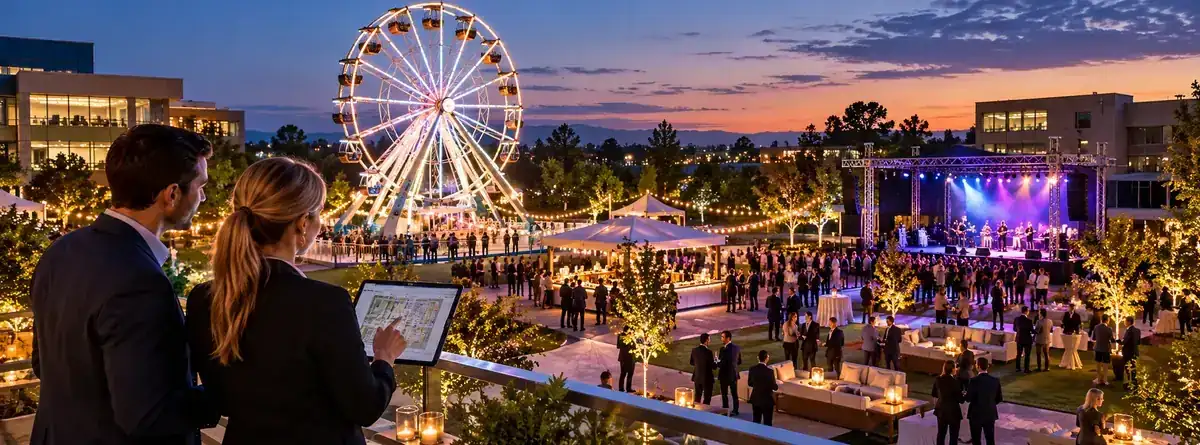
For a festival, review the festival and carnival Ferris wheel rental information while mapping the attraction against the rest of the site. For a company gathering, keep the event objective in view: the wheel may be a centerpiece, a guest activity, a visual landmark, or one part of a larger program. Budget approval is easier when everyone agrees on its role.
Keep a Contingency Line Without Inventing a Percentage
Large events benefit from some uncommitted budget room, but there is no responsible universal percentage that fits every Ferris wheel event. The amount should be based on the organizer’s overall plan, venue, planning stage, and the number of items still unresolved. A contingency line helps prevent every later adjustment from forcing a cut somewhere else.
Use that reserve for genuine event changes rather than padding the attraction line with an unsupported guess. As the venue, schedule, access plan, selected wheel, and optional elements become firm, the team can reduce uncertainty and decide where the reserve is still needed.
Use a Final Budget Check Before Approval
Before the Ferris wheel number is locked, make sure the planning team can answer a short list of questions: Is the venue final? Are the date and operating hours confirmed? Has the selected wheel been identified? Has the rental provider reviewed access and site conditions? Are responsibilities for venue requirements and local coordination clear? Are optional branding or presentation items included or excluded? Is the proposal current?
If an answer is still open, mark it that way in the budget instead of assuming it will resolve itself. That makes the budget more useful for both approval and production.
Turn the Budget Into a Planning Tool
The strongest Ferris wheel budget does more than reserve money. It connects the attraction to the venue, schedule, event purpose, and the decisions that have to be completed before event day. That is what separates a usable working budget from a placeholder estimate.
When the city, venue, date, operating hours, and event type are ready, contact Ferris Wheel Rent for a current proposal and use that event-specific information to finish the budget.
Frequently Asked Questions
Should I use an online price estimate when budgeting for a Ferris wheel?
A current event-specific proposal is more useful because the budget can then reflect the actual event location, date, venue, operating schedule, selected ride, and planning requirements rather than a generic estimate.
What information should I have before requesting a Ferris wheel proposal?
Have the event city and state, venue, date or dates, preferred operating hours, event type, and any known site or access information ready to discuss.
Should optional branding or presentation features have their own budget line?
Yes. Keeping optional presentation elements separate until they are confirmed makes it easier to compare them with other event priorities without confusing them with the core attraction decision.
Do festivals and corporate events require the same Ferris wheel budget approach?
They share basic planning needs, but the surrounding priorities can differ. Festivals may place more emphasis on site operations and other attractions, while corporate events may place more emphasis on guest experience, branding, program timing, and presentation.
How much contingency should I add to a Ferris wheel event budget?
There is no universal percentage that fits every event. The appropriate reserve depends on the venue, planning stage, overall event budget, and how many site, schedule, access, or optional elements remain unresolved.