
 Date: Oct 01, 2026
Quick Answer
A rented Ferris wheel usually arrives by semi truck and needs a clear route, a suitable setup area, and time for assembly and operational testing. Event organizers should confirm access, ground conditions, power, inspections, and the event schedule with the rental provider before delivery day.
What to Expect Before the Wheel Starts Turning
Seeing a Ferris wheel arrive at an event site is exciting, but the visible ride is only one part of the process. A large attraction must be transported, positioned, assembled, tested, and prepared before the first rider boards. Knowing what happens on delivery day helps event planners protect the schedule and give the crew room to work.
The exact process depends on the selected ride, venue, access route, ground conditions, weather, operating hours, and local requirements. The best place to begin is with a clear conversation about the site and schedule. Ferris Wheel Rent’s rental process explains the information needed before a date is reserved and the major steps that follow.
Before the Truck Arrives
Long before delivery day, the event organizer and rental provider should confirm where the ride will go and how the equipment will reach that location. Share the event address, venue map, preferred setup area, event hours, expected schedule, and any restrictions that could affect a large delivery vehicle. A narrow entrance, low overhead clearance, sharp turn, soft shoulder, or crowded loading area can change the plan.
The setup area also needs to be suitable for the selected Ferris wheel. The rental provider can provide the footprint for that ride, along with access information that helps the venue prepare. The surface may need to be pavement, concrete, or firm grass and should be reasonably level. It is also important to identify a practical location for the power generator and keep the working area clear of unrelated event equipment.
Delivery and Site Access
A Ferris wheel arrives by semi truck, so the delivery route deserves the same attention as the guest entrance. The truck needs a path to the setup area, and the crew needs enough room to position the equipment without working around tents, stages, parked cars, fencing, or unfinished landscaping. If the venue has a complicated approach, provide photos or a site plan before the scheduled arrival.
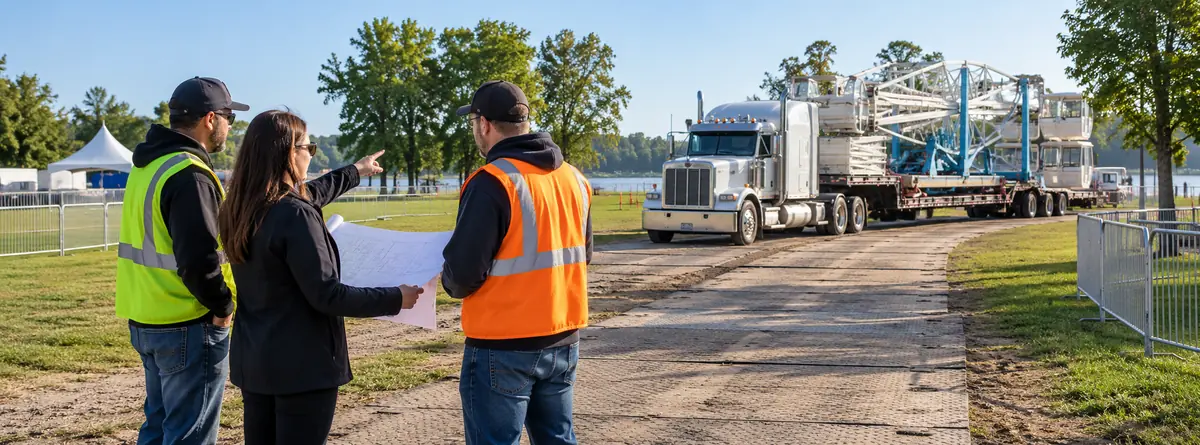
Many organizers treat the ride footprint as the only space requirement. Delivery and assembly require working room beyond the final footprint. Guest pathways, queue space, fencing, nearby attractions, emergency access, and the generator location should be considered before the truck arrives.
Positioning, Assembly, and Testing
Once the equipment reaches the setup area, the crew positions and erects the ride according to the selected Ferris wheel’s requirements. This is not simply unloading a trailer and plugging in an attraction. Components must be placed correctly, the ride assembled, and the operating area organized before guests are allowed near it.
Ferris Wheel Rent advises making the space available at least 24 hours before the event when possible. That extra time allows the team to work through delivery, setup, operational tests, inspections, branding or lighting needs, and weather-related changes without placing the opening schedule under unnecessary pressure.
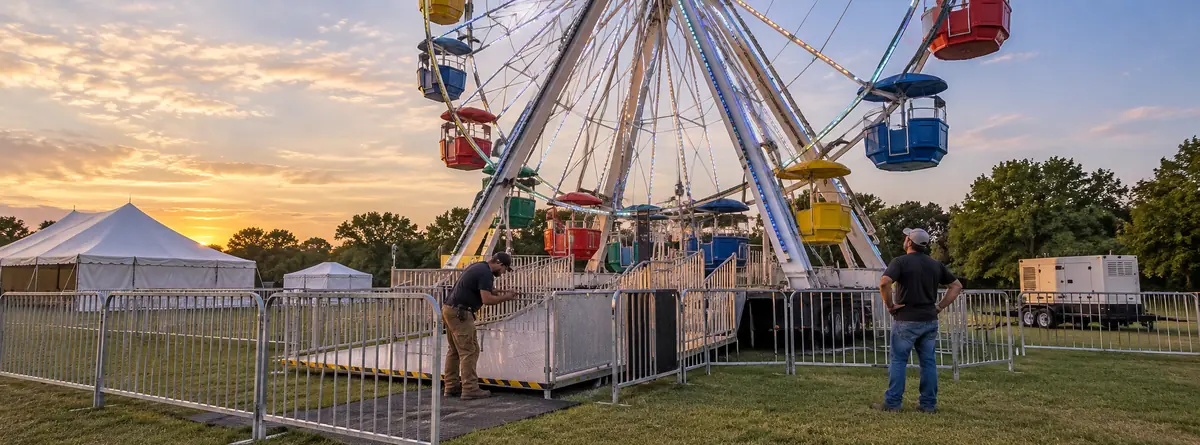
After assembly, the crew runs operational tests before the ride opens. Testing is an important transition between construction and public operation. It gives the team an opportunity to confirm that the ride area, controls, operating procedures, access points, and related equipment are ready for the event plan.
Inspections, Power, and Operating Readiness
Amusement rides are regulated differently from one state to another. Depending on the location, a ride may require an annual inspection, an inspection at each setup, proof of insurance, an engineering report, a permit, or other documentation. Ferris Wheel Rent works to schedule required state inspections after the date is reserved, while local zoning, electrical, or other local permits may remain the renter’s responsibility.
Power planning should also happen before delivery. The rental process identifies a location for the power generator within practical reach of the ride. Confirming that location early helps prevent conflicts with food vendors, stages, generators for other attractions, guest walkways, and venue restrictions. If the event includes custom branding, additional lighting, filming, or a special operating schedule, include those details during the planning conversation.
The ride operator and the event team also have different responsibilities. The rental provider supplies staff to set up and operate the ride and manage riders within the ride area. The event organizer remains responsible for the broader crowd, lines outside the immediate ride area, general security, and the overall movement of guests through the venue.
Planning the End of the Event
Teardown is part of the delivery plan, not an afterthought. Once the event ends, the crew dismantles and removes the equipment. Ferris Wheel Rent notes that teardown often takes six to eight hours, although the actual time can vary with the end time, weather, and site conditions.
Before guests arrive, decide when the event space must be cleared and whether other vendors need access immediately after the ride closes. Keep the exit route open, avoid placing late-night equipment in the removal path, and tell the venue team when the ride area will no longer be available. These simple steps can make the final stage much easier.
A Smoother Ferris Wheel Delivery Starts Early
A Ferris wheel can become a major visual and entertainment feature, but a smooth arrival depends on practical preparation. Confirm the access route, setup footprint, surface, power location, event timing, local requirements, guest flow, and teardown plan before the truck arrives. For a closer look at available attractions, visit the Ferris Wheel Rent collection and review the quote and planning options for your event.
Frequently Asked Questions
How does a Ferris wheel arrive at an event?
A Ferris wheel arrives by semi truck and needs a clear route to the setup area. The venue should confirm access, overhead clearance, turning space, and a suitable surface before delivery.
How much space is needed for Ferris wheel setup?
The required footprint depends on the selected Ferris wheel. The setup area also needs room for delivery, assembly, guest flow, fencing, and the power generator, so the rental provider should confirm the exact layout.
How early should the setup area be available?
Ferris Wheel Rent recommends making the space available at least 24 hours before the event when possible. That allows time for setup, testing, inspections, weather changes, branding, or additional lighting.
Who handles inspections and permits?
Ferris Wheel Rent works to schedule required state inspections after the date is reserved. Local zoning, electrical, or other local permits may be the renter’s responsibility, so requirements should be confirmed for the event location.
How long does teardown take after the event?
Teardown often takes six to eight hours, but the actual time can vary with the event’s end time, weather, and site conditions.