
 Date: Jul 15, 2026
How Ferris Wheel Lighting Technology Has Evolved
Quick Answer: Modern Ferris wheel lighting technology uses programmable LEDs, individually controlled light points, animated patterns, and digital displays to turn the entire wheel into part of the event experience. These systems can produce coordinated colors, moving effects, sponsor visuals, and event-specific presentations that were not practical with older fixed-bulb lighting.
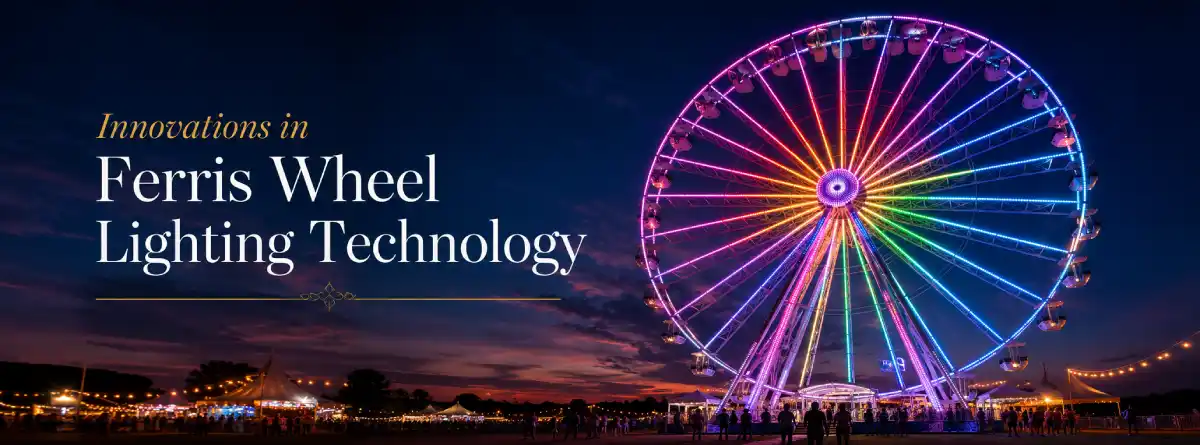
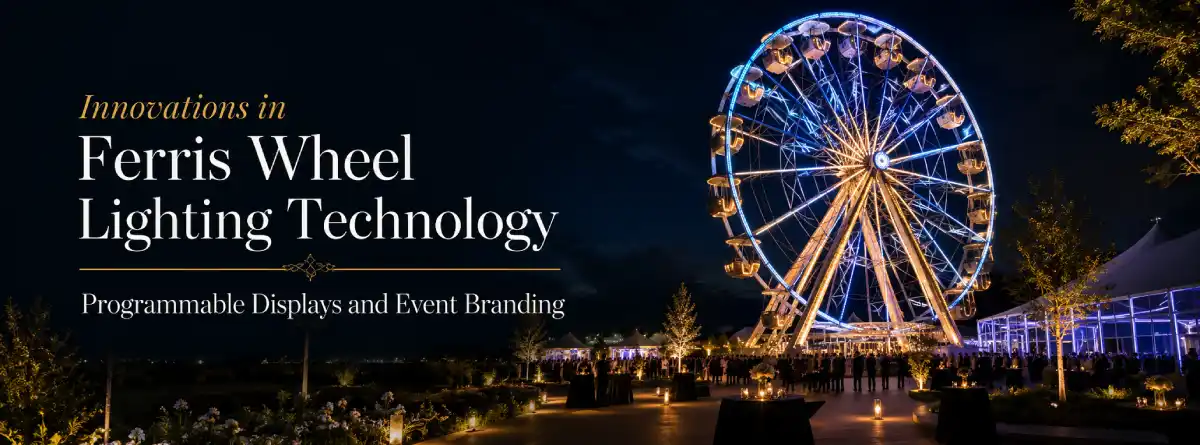
A Ferris wheel has always been easy to notice, but modern lighting has changed what happens after people notice it. Instead of simply outlining the wheel with one color, newer systems can send patterns across the spokes, change the appearance of the center hub, coordinate the rim with the support towers, and adapt the presentation to the event. Organizers comparing Ferris wheels available for rent should consider the lighting package as carefully as the wheel’s size, capacity, footprint, and operating requirements.
From Fixed Bulbs to Programmable LEDs
Older amusement ride lighting commonly relied on rows of fixed incandescent bulbs. Those bulbs created the familiar outline people associate with traditional carnivals, but changing the look of the ride usually involved replacing bulbs, changing lenses, or rewiring sections of the display.
LED technology made it possible to create a brighter and more flexible presentation using smaller light sources and electronic controls. A single fixture may be capable of producing several colors instead of being limited to one. That allows the lighting design to change without physically replacing every lamp.
The result is a Ferris wheel that can look playful and colorful during a family festival, elegant during a private evening event, patriotic during a community celebration, or highly polished during a corporate activation. The structure stays the same, but its visual personality can change considerably.
Individual Light Control Creates Movement
One of the most important advances is the use of addressable lighting. Rather than turning an entire section on or off at once, a compatible control system can manage individual lights or smaller groups of lights independently.
This control creates the illusion of motion even when the wheel is loading passengers. Light can appear to travel from the center hub toward the outer rim, circle the wheel, chase along the spokes, pulse in waves, or build into a full-wheel pattern. When the ride begins turning, the programmed movement and physical rotation work together to create a much larger visual effect.
Well-designed programming does not need to be frantic. A slow fade between colors may fit a wedding or formal gala better than a fast chase. A music festival may call for stronger contrasts and more active sequences. The important innovation is not merely brighter light. It is the ability to control timing, direction, intensity, and color with much greater precision.
RGB and RGBW Systems Expand the Color Range
Many modern systems use RGB lighting, which combines red, green, and blue light to produce a broad range of colors. RGBW fixtures add a dedicated white component. That extra white channel can be useful when an event needs clean white illumination, softer pastel tones, or a more refined presentation than saturated colors alone can provide.
For event planners, this means the wheel may be able to complement a school’s colors, a holiday palette, a product launch, a sponsor theme, or the overall lighting design of the venue. Exact color matching depends on the equipment, controller, programming, surrounding light, and viewing conditions, so organizers should discuss the desired look before assuming that every shade or effect is available.
Ferris Wheels Can Become Digital Displays
Lighting is no longer limited to individual lamps placed along the structure. Some Ferris wheels now incorporate programmable display surfaces capable of showing motion graphics, images, video, sponsor material, or event messages.
For example, Ferris Wheel Rent’s 16-seat giant Ferris wheel with programmable displays provides event organizers with a different type of visual opportunity than a traditional illuminated center panel. The display can become part of the event presentation instead of serving only as a decorative light source.
This is especially useful for corporate gatherings, branded experiences, product launches, televised productions, trade shows, and sponsored festivals. The wheel can help reinforce the event’s visual identity while still functioning as a ride and prominent gathering point.
Lighting Can Follow the Rhythm of an Event
Programmable systems can be organized into scenes or sequences. One scene might use a calm pattern while guests enter. Another may provide stronger animation during a concert break, countdown, announcement, or sponsor presentation. A closing sequence can give the event a planned visual finish rather than leaving the wheel in the same pattern throughout the evening.
More advanced setups may be coordinated with music, stage cues, or other lighting equipment when the available controller, programming, and event-production system support that type of integration. This requires planning. The ride operator, lighting programmer, event producer, and electrical team must understand what equipment is being used and who is responsible for each part of the presentation.
Reliability Matters as Much as Appearance
A Ferris wheel operates outdoors, often in changing temperatures, wind, dust, humidity, and occasional rain. The lighting system therefore needs more than visual appeal. Fixtures, controllers, wiring, connectors, power supplies, and mounting points must be suitable for the operating environment and maintained as part of the attraction.
Modern systems may include modular components that make a failed light or section easier to diagnose and replace. Some lighting products also include thermal protection, emergency settings, or control methods designed to prevent one failed component from disrupting an entire sequence.
Those technical details rarely appear in event photographs, but they matter during setup and operation. A complicated show is only valuable when the system can perform reliably throughout the scheduled event.
Why This Matters
Lighting changes a Ferris wheel from a ride that guests discover after entering the venue into a landmark they may notice before they arrive. The illuminated wheel helps establish the location of the event, gives attendees a natural meeting point, creates a recognizable background for photographs, and adds visible activity above tents, buildings, stages, and crowds.
This can be especially valuable at large festivals and corporate events where organizers need one attraction to define the overall space. Visitors may not remember every individual booth or decoration, but they are likely to remember the glowing wheel above the event. Organizers can review the Ferris Wheel Rent event gallery to see how lighting, wheel size, venue layout, and surrounding event production work together in real settings.
Common Mistakes
- Assuming every LED Ferris wheel offers the same colors, brightness, animation, or programming options.
- Waiting until setup day to discuss custom colors, display files, sponsor content, or special lighting sequences.
- Choosing extremely fast or intense effects that conflict with the atmosphere of the event.
- Forgetting to consider nearby stage lighting, video walls, streetlights, signage, and other sources of visual competition.
- Using low-resolution logos, incorrect video dimensions, or unfinished graphics for a programmable display.
- Planning the visual presentation without confirming power, access, setup time, operating hours, and event permits.
Best Practices
- Ask for current nighttime photos or video of the specific Ferris wheel being considered.
- Discuss event colors, branding, display content, and special sequences before the contract is finalized.
- Provide logos, graphics, and video files in the dimensions and formats requested by the operator.
- Coordinate the Ferris wheel lighting with the stage, entrance, sponsor areas, and overall venue design.
- Use slower, cleaner patterns for formal events and more active sequences where the audience and entertainment style support them.
- Plan for a technical review when the lighting must synchronize with music, video, or production cues.
- Allow enough setup time for testing the ride, lighting system, display content, power supply, and any custom presentation.
Daytime and Nighttime Visibility Are Different
High-output LED lighting can remain visible during daylight, particularly when the wheel uses strong contrast and saturated colors. However, the complete effect becomes more noticeable as natural light fades. An afternoon event that continues past sunset can benefit from both experiences: the wheel serves as a large structural landmark during the day and gradually becomes a lighted centerpiece in the evening.
Event planners should consider sunset time, operating hours, surrounding light, and the direction from which guests will approach. A wheel placed where it is clearly visible from the entrance can create anticipation before attendees reach the ride area.
Lighting Does Not Replace Operational Planning
A visually impressive lighting system is only one part of a successful rental. The site still needs suitable access for transportation, a stable setup area, adequate clearances, an appropriate power location, controlled rider access, and enough time for assembly and testing.
Custom lighting or display content may also require additional preparation. Organizers should identify who will approve graphics, who will supply final files, and whether sponsor or event branding must be removed or changed at specific times.
The Ferris wheel’s lighting should support safe operation rather than distract from it. Operators must still be able to communicate with riders, monitor loading and unloading, and maintain a clearly controlled ride area.
Local Relevance
Ferris Wheel Rent is based in Blacksburg, South Carolina, but large Ferris wheel events often involve transportation, site coordination, state requirements, electrical planning, and production teams working across regional and state lines. The lighting discussion should therefore happen alongside the broader event plan rather than being treated as a last-minute decorative choice.
South Carolina festivals, college events, municipal celebrations, company gatherings, and private events can all benefit from lighting that matches the audience and venue. The same principle applies to events elsewhere: choose the presentation based on the setting, not simply on how many colors or effects the system can produce.
When to Contact a Professional
Contact the rental provider once the event date, city, venue, expected operating hours, and approximate attendance are known. Mention whether the event continues after sunset, whether custom colors are important, and whether the wheel will be part of a larger stage or lighting production.
Organizers should also explain any interest in sponsor graphics, logos, video, photography, filming, or synchronized effects. Reviewing the company’s Ferris wheel rental process can help identify the site, scheduling, setup, power, inspection, and operational information needed to prepare an accurate proposal.
Final Thoughts
The biggest innovation in Ferris wheel lighting is control. LEDs, addressable light points, programmable sequences, and digital displays give event organizers more ways to shape the attraction around the audience, venue, theme, and schedule. The best system is not necessarily the one with the fastest pattern or the largest number of colors. It is the one that supports the event without overpowering it.
To discuss available Ferris wheels, lighting capabilities, display options, event branding, setup requirements, and scheduling, request availability and a Ferris wheel rental quote from Ferris Wheel Rent.
Frequently Asked Questions
What type of lighting is used on modern Ferris wheels?
Modern Ferris wheels commonly use programmable LED bulbs, strips, modules, or pixel lights. Depending on the system, the lights may change color, dim, flash, or operate as individually controlled parts of a larger animated pattern.
Can Ferris wheel lights be programmed for event colors?
Many programmable LED systems can be arranged around an event’s preferred color palette. Available shades and effects depend on the specific Ferris wheel, controller, fixtures, programming, and surrounding lighting conditions.
Can a Ferris wheel display logos, messages, or video?
Some Ferris wheels include programmable display surfaces that can show approved logos, graphics, messages, slideshows, or video. Content requirements and display capabilities should be confirmed before the event.
Are LED Ferris wheel lights visible during the day?
High-output LED lighting may remain visible in daylight, but animated colors and patterns usually create their strongest visual effect at dusk and after dark. Ask to see the specific wheel under conditions similar to your event.