
 Date: Jul 01, 2026
How Ferris Wheels Help Cities Attract More Visitors
Quick Answer: Ferris wheels can help cities attract visitors by turning an ordinary event site into a visible destination. They create a landmark people can spot from a distance, give guests a memorable reason to attend, and encourage visitors to spend more time and more money exploring the festival area and nearby businesses.
A city does not need a permanent amusement park to create a tourism moment. A temporary Ferris wheel can change how a downtown festival, waterfront celebration, anniversary event, or holiday gathering feels before a guest even reaches the entrance. It rises above tents and rooftops, signals that something special is happening, and gives visitors an experience they cannot get from a row of vendors alone. For communities planning public celebrations, Ferris wheel rentals for carnivals and festivals can become both an attraction and a visual centerpiece.
A Ferris Wheel Gives the City a Visible Landmark
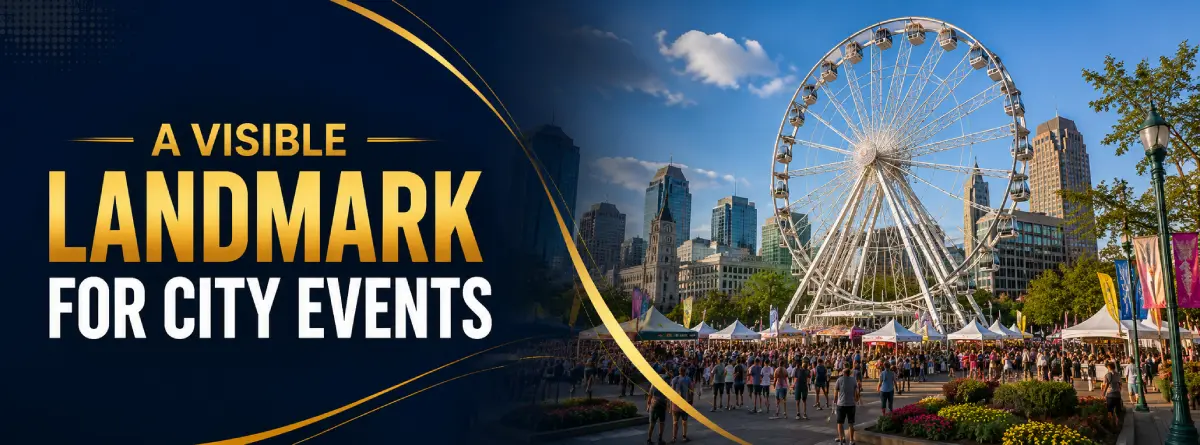
Many public events are difficult to understand from the outside. A visitor may see traffic, temporary fencing, or rows of parked cars without immediately knowing what is happening. A Ferris wheel changes that because its height, shape, and lighting make the event easy to recognize from surrounding roads, hotels, sidewalks, and public spaces.
That visibility matters because people are more likely to become curious when they can see the attraction for themselves. The wheel becomes a natural orientation point for the event and an image people associate with that weekend. Because it is so unmistakable, the city can promote a single symbol that conveys fun, scale, and celebration at a glance.
It Can Turn a Local Event Into a Reason to Travel
Most cities are not trying to attract visitors from across the country for every event. A more practical goal is to reach families, couples, and groups within a comfortable regional drive. Those travelers still need a clear reason to choose one town over another. A Ferris wheel can provide that extra pull because it makes the event seem larger and more unusual than a standard street fair.
The attraction works especially well when tied to a larger theme. A waterfront celebration can use the wheel to frame views of the river or harbor. A downtown anniversary can position it near historic buildings. A holiday event can use lighting to create an evening destination. In each case, the wheel is not the entire tourism plan, but it can become the feature that gets people to say, “Let’s go see that.”
Visitors Have a Reason to Stay Longer
Tourism value is not only about getting people through the gate. It also depends on what they do after they arrive. A Ferris wheel naturally creates a sequence: guests notice it, walk toward it, wait with friends or family, take the ride, take photos, and then continue through the event. That extra time can help a festival seem less like a quick stop and more like an outing with added value.
When the attraction is placed near food vendors, entertainment stages, shopping areas, or a walkable downtown district, visitors have more opportunities to explore. The best results come from treating the wheel as part of the event layout rather than dropping it into an isolated corner, because sightlines, pedestrian flow, queue placement, and connections to nearby businesses should all be considered early.
Nearby Firms Can Share in the Activity
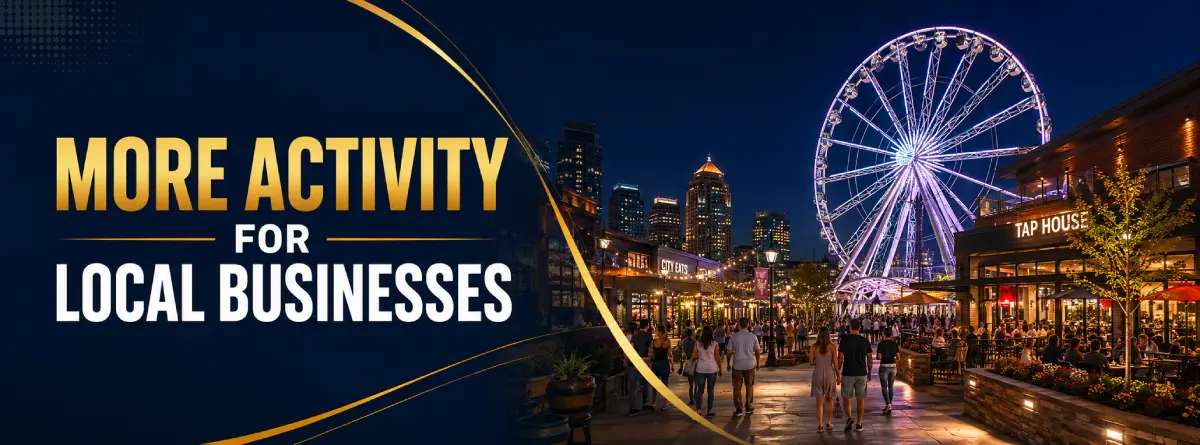
A strong city event should create movement beyond the attraction itself. Visitors may need parking, meals, coffee, lodging, souvenirs, or activities before and after the main event. Restaurants and shops are more likely to benefit when the Ferris wheel is positioned as part of a larger district experience instead of a self-contained ride area.
Event coordinators can support that connection with simple planning. A printed map can show the wheel, performance areas, parking, and participating businesses. Restaurants can offer event-night specials. Hotels can promote packages. Downtown merchants can stay open later. None of these steps guarantees spending, but together they make it easier for guests to move through the city and discover multiple attractions.
The City Gets a Stronger Photo and Social Media Identity
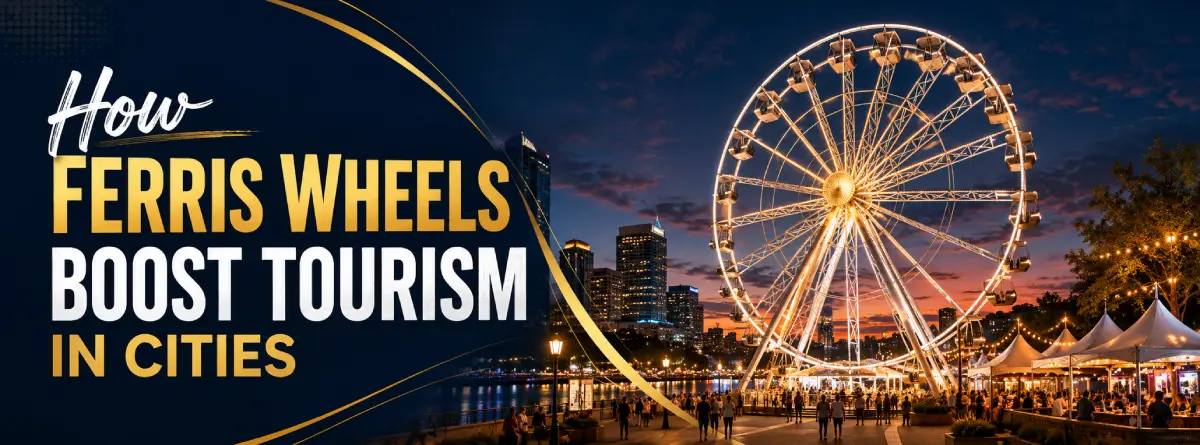
Tourism marketing works better when people can readily recognize the place and event being promoted. Ferris wheels are naturally photogenic because they add height, motion, color, and a familiar circular shape to the skyline. During the day, the wheel can frame buildings, water, mountains, or public spaces. At sunset and after dark, its lights can create an entirely different look.
That gives tourism teams, event sponsors, local media, and visitors more useful material to share. A guest photo from the wheel can show the surrounding city. A ground-level photo can capture the attraction behind a crowd or streetscape. Over time, those images can help the event develop a recognizable visual identity that supports promotion without relying on generic festival graphics.
Daytime and Evening Guests Get Different Experiences
A Ferris wheel can add value across a long event schedule. Daytime riders may focus on the view, family activity, and surrounding attractions. Evening riders see the event lights, stage areas, and city streets from above. That change in atmosphere gives guests a reason to stay into the evening or return at a different time.
For a city trying to support dinner traffic or nighttime entertainment, this day-to-night transition can be useful. The event does not have to feel finished when afternoon programming ends. Lighting, music, food, and a visible Ferris wheel can help keep the site active after sunset while remaining attractive to a broad audience and nearby businesses.
Choosing the Right Ferris Wheel for a Tourism Event
The right attraction depends on the venue, expected attendance, desired visual impact, operating hours, and event goals. Some events want a classic wheel that reads clearly from a distance. Others may want programmable lighting or branding opportunities that support sponsors and destination messaging. Review available Ferris wheel rental options early so organizers can match the ride to the site, rather than forcing the site to accommodate a late decision.
Practical considerations weigh just as much as appearance. Confirm truck access, setup space, ground conditions, power needs, fencing, queue space, operating hours, local requirements, and the time available for installation and removal before the event is finalized. A visually impressive idea still needs a workable site plan.
Why This Matters
Cities compete for attention with nearby festivals, sports, concerts, shopping districts, and weekend destinations. A Ferris wheel gives an event something people can understand immediately: a large, visible experience that feels worth leaving home to see. Its tourism value lies in how it connects the event, the skyline, local businesses, and visitors' memories into a recognizable scene that can support repeat interest.
The wheel should not be treated as a magic solution. It works best when the city has a clear audience, a coordinated event schedule, good access, strong promotion, and a plan for moving guests through the surrounding area. When those pieces are in place, the attraction can help the event feel like part of the destination rather than a temporary setup that disappears without leaving a lasting impression.
Common Mistakes
- Waiting until the site plan is nearly finished before checking setup space and truck access.
- Placing the Ferris wheel where it is hidden from major roads, entrances, or pedestrian routes.
- Treating the attraction as separate from downtown businesses, restaurants, hotels, and other event activities.
- Promoting the wheel is too late for regional visitors to make travel plans.
- Using generic marketing images that do not show how the attraction relates to the actual city or venue.
Best Practices
Choose a location with strong sightlines and a safe, practical setup route. Build the wheel into the event map, entertainment schedule, and visitor flow from the beginning. Plan photo angles that include recognizable local scenery, buildings, or waterfront views. Coordinate promotions with tourism offices, hotels, restaurants, sponsors, and downtown merchants. Confirm operating details, inspections, site requirements, and contingency plans well before the event date.
Local Relevance
For cities across the United States, the most effective use of a Ferris wheel depends on the place. A coastal destination may want views of the water. A university town may use the wheel during a campus celebration. A historic downtown may position it near a civic square, while a larger festival may use it as an anchor visible across the grounds. The recent Ferris wheel projects gallery can help planners see how the attraction works in different types of locations.
Local rules and venue conditions also vary. A city event team should verify the setup route, usable footprint, ground surface, operating area, local permitting responsibilities, emergency access, and any state inspection requirements that apply. Reviewing the Ferris wheel rental process early might prevent a strong tourism idea from becoming a last-minute logistics problem.
When to Contact a Professional
Contact a rental provider as soon as the city has a tentative date and a possible venue. Early conversations do not require every detail to be final, but organizers should be ready to share the location, event dates, desired operating hours, expected attendance, available setup window, access route, and any branding or lighting goals.
A professional provider can identify whether the proposed site is realistic, which further information is needed, and how far in advance the date should be reserved. This is especially important for city festivals because multiple departments, vendors, sponsors, and permitting authorities may need time to coordinate.
Final Thoughts
Ferris wheels boost tourism most effectively when they are used as more than a ride. They can become a city landmark for the weekend, a reason for regional visitors to make the trip, a source of memorable photos, and a bridge between the event and nearby businesses. The key is to plan the attraction around the destination, not simply place it on an empty piece of ground.
City planners, tourism boards, festival organizers, and event producers can request Ferris wheel rental information to discuss venue needs, availability, setup requirements, and options for creating a stronger destination event.
Frequently Asked Questions
How do Ferris wheels help city tourism?
Ferris wheels create a visible landmark, give visitors a memorable activity, and can encourage people to spend more time exploring the event area and nearby businesses.
Can a temporary Ferris wheel become a tourism attraction?
Yes. A temporary wheel can become the centerpiece of a festival, waterfront event, holiday celebration, anniversary, or downtown gathering when it is promoted and positioned well.
What types of city events benefit most from a Ferris wheel?
Community festivals, music events, downtown celebrations, waterfront gatherings, holiday events, university programs, tourism campaigns, and major civic anniversaries can all be a good fit.
How far in advance should a city book a Ferris wheel?
Organizers should begin the conversation as early as possible, especially for popular weekends. The venue, travel distance, setup schedule, inspections, and availability all affect the timeline.
What site details need to be confirmed before renting a Ferris wheel?
Important details include truck access, setup space, ground conditions, power, fencing, queue space, operating hours, inspection requirements, emergency access, and teardown timing.